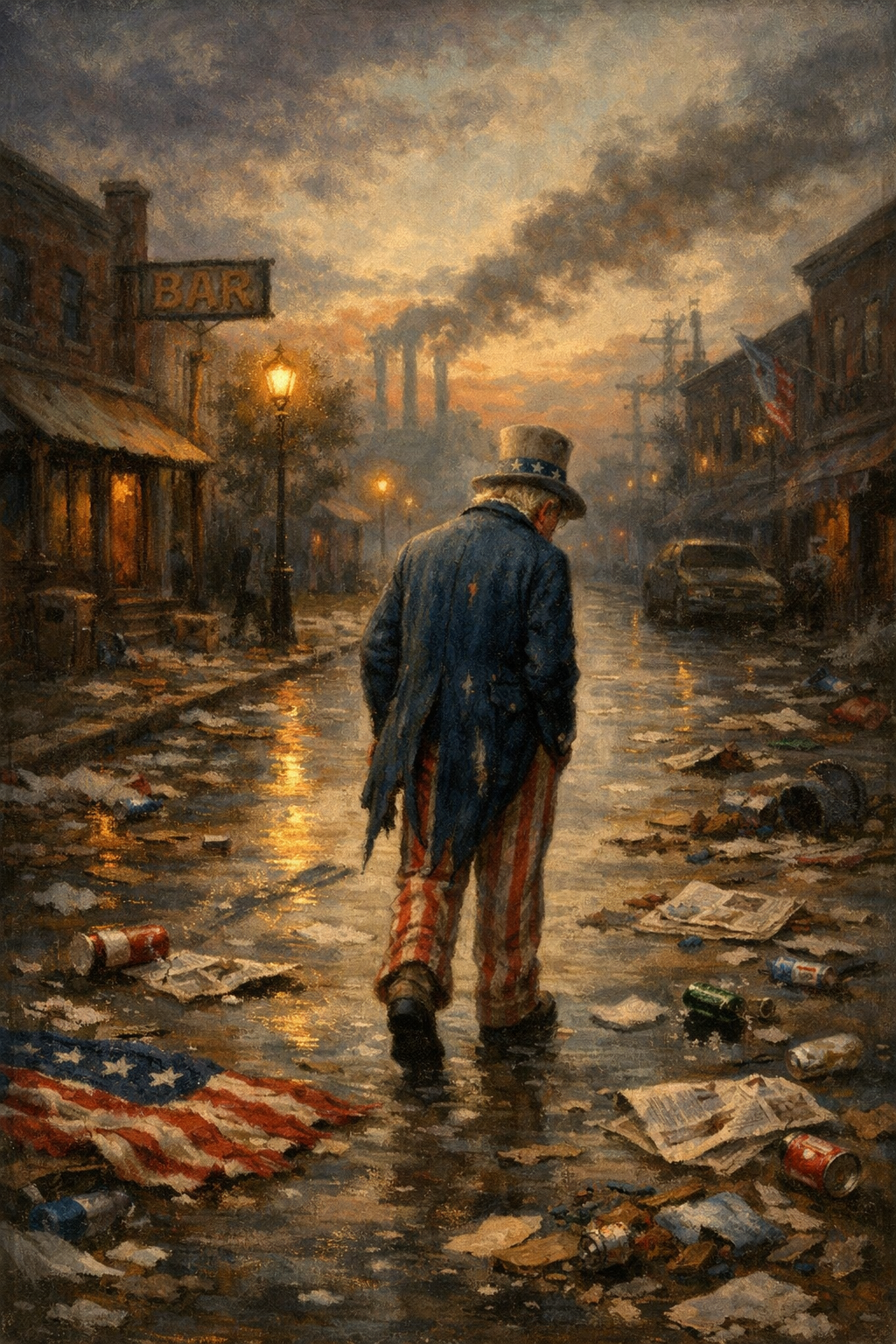
Like Bob Seger said, “I’m a ramblin’ man…” I have rambled many places and I have lived in a few. Born in California, I now live in the upper Midwest. This page is about another type of rambling…rambling thoughts and senseless musings. I hope you enjoy!
There was a time when the land that would become California shook under the weight of the largest bears on the continent.
The California Grizzly bear – a now-extinct population of the Grizzly bear – once roamed from the Pacific shoreline to the Sierra Nevada. They fished the rivers, wandered through oak woods, and made their dens in foothill chaparral. Spanish settlers wrote about them. Indigenous Californians lived among them.
It is believed that as many as 10,000 grizzlies inhabited California before the Gold Rush.
Today, not one remains.
The California grizzly was not a different species, but it was legendary in size and temperament. Adult males could exceed 1,000 pounds.
When American settlers flooded into California after 1848, they encountered a creature that did not yield easily. Grizzlies raided livestock, destroyed fencing, and occasionally attacked humans. But they were not invading anything; we were.
The bear had occupied that land for thousands of years , but newcomers saw not a keystone predator but an obstacle.
During the Gold Rush era, grizzlies were hunted relentlessly. They were poisoned, trapped, shot, and even lassoed from horseback in public spectacles. Bear and bull fights became popular entertainment.
The irony is hard to ignore: in 1846, the grizzly became the symbol on the flag of California , born from the short-lived California Republic. Strength. Independence. Defiance.
And then we exterminated it.
By 1924, the last known wild California grizzly was shot in Tulare County. The state animal had vanished from the state.
Today, every schoolchild in California recognizes the bear on the flag. The California Golden Bears carry its name. Businesses, highways, and civic monuments honor it.
Yet the real animal survives only in museum mounts and faded photographs.
Monarch, one of the last California Grizzly bears, mounted and posed to be part of the flag of the very state that destroyed him.
There’s something haunting about that.
We chose the grizzly as our emblem because it represented strength. But true strength isn’t dominance—it’s coexistence. The bear could not adapt to a rapidly fenced, farmed, and industrializing California. And we refused to adapt to it.
There is ongoing debate about reintroducing grizzlies to parts of California. Similar reintroductions in the Rockies have shown that ecosystems can rebound when apex predators return.
But California today is not the California of 1820. It is a state of nearly 40 million people. Freeways replace migration corridors. Subdivisions occupy valleys where grizzlies once foraged.
The question is no longer can we bring them back? It’s would we tolerate them if we did?
My family has lived in what is now the United States since before it was the United States. Before flags and anthems, before constitutions and slogans, before we even knew what “America” was supposed to mean. We were here under colonial rule, here through revolution, expansion, civil war, and reinvention after reinvention. We were pioneers, then farmers, and finally businessmen. America is part of my DNA in a way that’s hard to explain without sounding dramatic—but it’s true.
That’s why it feels strange, and a little disloyal even admitting it, that I think about leaving.
I love this country. I love its landscapes, its contradictions, its stubborn creativity. I love the way people here still believe—sometimes foolishly, sometimes beautifully—that things can be better. I love the music, the writing, the open road, the sense that reinvention is not just possible but expected. America taught me to question authority, to value independence, to speak my mind. Those aren’t small gifts.
But loving something doesn’t mean ignoring what it’s become.
Our politics feel less like civic disagreement and more like permanent psychological warfare. Nuance is punished. Curiosity is suspect. If you don’t fully submit to one side’s narrative, you’re treated as an enemy or a fool. The noise is constant, exhausting, and deliberately polarizing. It’s hard to feel grounded when every issue is framed as an existential threat and every election as the last one that will ever matter.
What troubles me even more is how casually we treat the rest of the world.
America still talks about itself as a moral leader, but too often our actions don’t match the story we tell. We intervene, destabilize, sanction, and surveil—then act shocked when resentment follows. We export culture, capital, and conflict with equal confidence. We talk about freedom while cozying up to authoritarian regimes when it’s convenient. We lecture other nations about democracy while struggling to maintain our own.
We’re loud about our values but inconsistent in living them. And when we’re confronted with the consequences of our global behavior, we double down or look away rather than listen.
I don’t want to leave because I hate America. I want to leave because I love it enough to be disappointed.
There’s a particular kind of grief that comes with watching something you care about drift further from its ideals. It’s the grief of unmet potential. Of knowing we could do better—be better—but choosing comfort, power, or tribal loyalty instead. That grief doesn’t cancel out pride or gratitude. It sits alongside them, heavy and unresolved.
Sometimes I imagine what it would feel like to live somewhere quieter politically, where civic life isn’t a constant emergency broadcast. Somewhere the national identity isn’t built on declaring superiority, but on maintaining balance. Somewhere patriotism doesn’t require blindness.
I don’t know if that place exists. Maybe every nation has its own version of this disillusionment, and I’m romanticizing distance the way people always do when they’re tired.
What I know is this: wanting to leave doesn’t erase my roots. It doesn’t negate my love for this country or my respect for the generations before me who endured far worse and kept going. It’s simply an honest reaction to the present moment—a moment where America feels less like a shared project and more like a perpetual argument with no off switch.
I’m sure I’ll never actually go. My children and grandchildren are here. But the fact that I think about it at all says something important. Not just about me, but about where we are.
And if America is truly as strong as it claims to be, it should be able to hear that without flinching.
Some writers stay with you long after you close the book, and James Oliver Curwood is one of those writers for me. I don’t just read his stories — I escape into them. Every time I open one of his books, it feels like stepping into the wilderness with someone who truly knew and loved it.
What I admire about Curwood’s writing is how natural it feels. His novels never try too hard, yet they pull you in completely. Books like Kazan, Baree, Son of Kazan, and The Grizzly King make the wild feel alive. The animals have loyalty and personality, the landscapes feel real, and nature is never just a backdrop — it’s part of the story itself.
As I learned about James Oliver Curwood’s writing career, the more impressed I became. He wasn’t a niche adventure writer; he was one of the most widely read authors of the early 20th century. His books sold around the world, were translated into multiple languages, and became the basis for dozens of films. One of his most successful novels, The River’s End, was adapted into several movie versions, and Hollywood returned to his work again and again because it was already cinematic — dramatic settings, clear stakes, and stories that moved. One of the most recent, fully fifty plus years after his death, was The Bear, released in September, 1984 and based on the book, The Grizzly King.
What really deepens my admiration for Curwood is how closely his life matched his writing. He spent real time in the wilderness and later became a strong advocate for conservation. That sincerity shows up on the page. His stories believe in loyalty, courage, and justice without irony, and that honesty is a big reason his work still resonates today.
James Oliver Curwood’s life was tragically short. He died of blood poisoning in 1927 at just 48 years old, at a time when his popularity was enormous and his voice still evolving. It’s hard not to wonder how many more stories he might have told if he’d had more time. Even so, what he left behind is remarkable — a body of work that reached millions of readers and continues to find new audiences generations later.
Curwood Castle, James Curwoods writing studio, still stands on the banks of the Shiawassee River in Owosso, Michigan.
“Some writers leave behind books. Curwood left behind a world.”
For me, reading James Oliver Curwood is a reminder of why I fell in love with books in the first place. His stories slow me down, something I sorely need. They invite me to pay attention — to nature, to character, to the quiet power of good storytelling. That’s why I keep coming back. Not out of nostalgia, but because his writing still works, still transports, and still feels true.
Imagine you’re lying on your back in a peaceful field in the summer.
The grass is warm from the sun, and it bends just enough to make a place for your body. It feels a bit like stepping out of time. The earth hums softly beneath you—crickets chirp, the wind brushing past like it has somewhere better to be. Above it all, a beautiful blue sky stretches wide, endless, and unbothered.
Clouds drift by with no urgency. One looks like a ship, then a dog, then nothing at all. You don’t try to hold the shapes; you let them pass. The blue feels deeper here, lying flat on your back . It is as if the sky has leaned closer just to check in.
There’s a relief in doing nothing but looking up. No screens, no schedules, no need to interpret anything. You can let your thoughts drift, slow down, and float the way the clouds do. In that moment, it’s enough to breathe, to exist, to feel small in a way that’s comforting instead of scary. Much like crawling completely under the covers when you were a child.
Eventually you’ll stand up and go back to your life. But the sky will still be there—wide, patient, and waiting.
Not in a symbolic way, not as a stand-in for power I don’t personally hold, but as an ordinary citizen of the United States who understands that our country’s politics don’t exist in a vacuum. What happens here spills outward—into your economies, your borders, your climate, your safety, and your sense of stability. And too often lately, what spills out is chaos, cruelty, or indifference.
I know that many of you watch U.S. politics with a mix of disbelief and exhaustion. So do many of us who live here. We watch leaders argue in bad faith, institutions strain under pressure, truth treated as optional, and basic human dignity turned into a political bargaining chip. We see our country, which speaks endlessly about freedom and democracy, struggle to practice either with consistency.
I’m sorry for the policies that have harmed people beyond our borders. I’m sorry for the wars we’ve fueled, the alliances we’ve taken for granted, the climate commitments we’ve weakened, and the ways our internal divisions have made the world less predictable and less safe. I’m sorry for the times our loudest voices have been the angriest ones.
I’m also sorry for the arrogance that sometimes comes with American power—the assumption that we know best, that our problems matter more, that our values are universal even when our actions don’t live up to them. That disconnect is felt everywhere.
But I want you to know this: the United States is not a single voice. It is not just its politicians, its headlines, or its worst moments. Millions of people here are tired, scared, and fighting—organizing, voting, teaching, protesting, caring for one another, and trying to push this country toward something better. Many of us are deeply aware of the harm being done and feel it as a moral weight, not a distant abstraction.
An apology alone doesn’t fix anything. I know that. Accountability matters more than words. Change matters more than regret. But silence can look like acceptance, and this is me refusing to be silent.
We are trying. Sometimes clumsily. Sometimes too slowly. But many of us still believe in democracy, in human rights, in science, in cooperation, and in the idea that no nation is above responsibility to the rest of the world.
So from one American who doesn’t speak for the government but does speak from conscience: I’m sorry for the damage being done in our name. And I hope—sincerely—that we earn back trust not through slogans, but through better actions, better leaders, and a renewed commitment to the shared future we all depend on.
I enter 2026 adrift. I feel alone on a boat with no motor, no wind, and no oars to propel me. For as far as I can see in any direction is just flat water. I have no sense of direction or where safe land may be. I have no idea of which way to go and fear any path taken may be the wrong path. There is no compass in my kit to guide me by day or sextant to find my way by the stars at night. The boat is only as safe as the moment when an unexpected storm flips it. I have a radio and call for help, but while others can hear me, they can’t find me, they can’t guide me. A safe harbor is out there, I just don’t know where.
Looking westward in central Nebraska as day comes to an end.
Colorado
The wide open plains of northeastern ColoradoRanch land and grass as far as one looksIn the distance, the Rocky Mountains riseRising out of Denver into the RockiesThe upward grade is constantThe Eisenhower Tunnel bores almost 2 miles through a mountainFrom where I have comeTo where I am headed
Utah
Utah is a land straight out of an old time western.The canyons just seem to reach out into infinitySad moment in historyThe beautiful mountain meadow todayJust to the right of the yellow trees is the burial ground for those massacred
Idyllwild, CA
Red Kettle – Best café in town!View from Suicide rockLimo for the mayor of Idyllwild – a golden retriever named MaxTahquitz RockBark of a manzanita treeTahquitz Rock as seen from Suicide RockLooking over the valley belowLightning struckMajestic Ponderosa pineDeer Creek trailFor perspective – I am 5′ 10″ and it would take 5 or 6 of me arms outstretched to reach around this trunk“Stairway to Heaven”Wouldn’t want that to fall on your head. NOT the biggest I saw!
Orange, CA
The PlazaOld Wells Fargo Bank buildingOld Orange County Fruit Exchange buildingBanyan tree – Eisenhower ParkTurtles – Eisenhower ParkFire station of my youth – still alive and kicking 60 years later
Route 66 – California
Upland, CARialto, CALudlow, CALudlow, CARoy’s Cafe and Motel, Amboy, CAAs I crossed into Arizona, the California Gateway slid into my rearview mirror.
Route 66 – Arizona
Mountains in the distance leading to OatmanThe Oatman welcome wagonMy personal representativeWhat’s a western town without a saloonOatmanOatmanOatmanOatman localValleys to the west of OatmanGlen Frey forever is standing on the corner in Winslow, just taking it easy!Winslow, AZWinslow, AZJust east of Chambers, AZ, another ghost rises by the roadside.
Route 66 – New Mexico
The red buttes and bluffs signal the entrance to New Mexico.The red buttes and bluffs signal the entrance to New Mexico.Just after crossing into New Mexico, another ghost rises as the highway crosses the Navajo Nation.Just after crossing into New Mexico, another ghost rises as the highway crosses the Navajo Nation.West of Grants, the tableau of forgotten dreams continues.Now a “museum piece” of Old 66, I recall driving across this bridge in the 90’s.The old Rio Puerco bridge just west of Albuquerque.
Route 66 – Texas
An abandoned Phillips 66 gas station silently reminds Adrian, TX of better days, when gas was 39 cents per gallon.Just up the road from Adrian, the town of Landergin’s abandoned grain silo shows it hasn’t fared any better.The Leaning Tower of BrittenOld Conoco station and café hanging tough in Shamrock
Route 66 – Oklahoma
This is oil countryThe field of chairs.The chair for Baylee Almon, who had turned one just the day before.Looking across the reflecting pool to the field of chairs.9:019:03Read for next pictureThe granite walkway that encircles the pool is granite salvaged from the Murrah Building.Part of the old Murrah building walls still encircle the site.Read for next pictureSurvivor TreeRead for next pictureFirst responders marked the wall of a nearby building and it remains for all to see.The museum and memorial building.A once thriving service station, now just another ghost in Afton, OK.Downtown Afton is just a memory of what once was.
Route 66 – Kansas
Rainbow Curve Bridge, outside Baxter Springs, KS
Route 66 – Missouri
Another old Phillips 66 station along the road. This one is a museum, but in the gray light of day looks abandoned.Next to the old museum, this was the last iron bridge I would cross on this adventure.
If you enjoyed this photoblog, please like and subscribe.
Not being a fan of cities, it was nice to be able to set out of Tulsa, OK while it was still dark and the traffic was light. The drive across the Oklahoma countryside was quiet and still at this time of morning, just me and few of those whose jobs require an early start on the road.
A little over an hour into my drive, I passed through the town of Afton. Afton is just another small Midwest town that suffered with the interstate highway making their main street another slightly used secondary road.
A once thriving service station, now just another ghost in Afton, OK.Downtown Afton is just a memory of what once was.
Commerce, OK, a town of 2,300 people is another 20 miles along the mother road, but like its neighbor Afton, it has seen better days. Only its advantage of being a slightly larger town seems to have saved it from having the same level of decay as Afton.
I want to say that by this point on day four, I took fewer pictures of the Old 66 “ghosts” as I like to call them. Truth be told, I could have spend multiple days in every state just photographing lost dreams, but there is only so much to say when there is nothing left to say it about. Seeing dreams of yesterday turned over in the wake of progress is only a reminder that what we enjoy today will someday also meet the same fate. Progress, like time, stops for no one.
Around 8:45AM, I crossed the border into Kansas. In this case, not only did the interstate highway system bypass some little towns, in this corner the interstate bypassed Kansas. Old Route 66 still takes you through about 10 or 15 miles of Kansas; Interstate 44 takes you directly into Missouri.
Just after crossing the KS border, I passed through the little town of Baxter Springs. This is a town that has lived well off its partnership with the mother road. While small, Baxter Springs is cute and well kept, with several Route 66 shops to stop and look at. There were very nicely kept homes lining the street. I was curious as I often was along the way and I googled the median cost of a home in Baxter Springs and was amazed (in this current era) to find that it was still under $100,000 and the average home price was $116,000. I just am not sure what people here do for a living, so perhaps that is no more affordable than housing where I live that costs much more, but it does somehow ring to a simpler way of life.
Rainbow Curve Bridge, outside Baxter Springs, KS
Not long after passing the Rainbow Bridge just northeast of Baxter Springs, I slid across another border and was in Missouri. For quite a stretch in Missouri, Old 66 was a service road along the newer interstate. At one point I thought the app that kept me routed on 66 was leading me astray. The road it took me on has a large sign for a local park and seemed to be entering a parking area, but 66 actually rolled right out the other side and I had a beautiful drive along a small river for a short while. The rolling Missouri hillsides were charming and a few of the tree were still holding on to those last colored leaves that refuse to admit that winter is coming.
Another old Phillips 66 station along the road. This one is a museum, but in the gray light of day looks abandoned.Next to the old museum was the last iron bridge I would cross on this adventure.
Shortly after crossing this last iron bridge, my Route 66 app lost connection and sent me astray. Not far, but it was frustrating. It was not the first glitch I had with this app on the trip and I was officially over it by now. My destination “goal” for this day was Springfield, IL. Springfield is the home a Abraham Lincoln, the 16th president of the U.S., and my childhood hero. I intended to see his home and then go see his tomb, two things I have never done and always have wanted. At Springfield, I intended to leave 66 on it’s last short leg to Chicago and cut over into Indiana to get home quicker the next day.
So you’ll note I said “intended” to see his home and grave. The day was gray, rainy, and cold. The glitch with the app, days of being away from home, sleeping in cheap motels and eating lousy food, overrode my goal. I just wanted to sleep in my own bed, next to my wife. When the time came to curve away toward Springfield, I jumped on the interstate and made my goal home. I knew it would make for a very long day of driving and would be close to 10PM when I got in, but it was worth it.
Despite horrible traffic and construction in the Chicago area, I persevered and got home when I thought I would.
This little trip on Route 66 was well worth the adventure. I want to do it again, with more time, and more completely. I want my wife with me. This is an experience to be shared. I will be better prepared with maps and points of interest than just “winging it.” It is the “mother road,” and sometime you just need your mom!
Thank you for following my adventure and reading my ramblings.
Keep rambling…
If you enjoyed this article, please like and subscribe.
As is my pattern, I left Santa Rosa at dawn. This stretch of Route 66 should be called El Conejo (el cone-ay-hoe) Road, as I have never seen so many jackrabbits in my life. They are everywhere. Maybe it is a morning thing with rabbits, I don’t know, but it was enough to make sure I kept my eyes open for the little beasts.
This is a long, lonely stretch across the eastern New Mexico plain, but my old friend the railroad still powers along beside me. He and I are becoming regular roommates on this trip. The sun is still low in the sky as I roll into Tucumcari, NM. Tucumcari has a magical ring to me, but magic is not what I felt as I entered town. In few places did the effects of the interstate highway seem more clear to me. Still a fairly good sized town of around 2,000 people, more than half of the motels and cafes as I entered town were boarded up. Only downtown Tucumcari itself seems to have at least made a little bit of a go at surviving and carrying on its legacy of a Route 66 stop.
Somewhere near the New Mexico/Texas border, even my old friend the railroad takes its leave. I guess even it has had enough of these senseless ramblings.
An abandoned Phillips 66 gas station silently reminds Adrian, TX of better days, when gas was 39 cents per gallon.Just up the road from Adrian, the town of Landergin’s abandoned grain silo shows it hasn’t fared any better.
Outside the town of Britten TX, I was quick to notice something that is a bit of a draw on Old 66. It is a water tower, but what sets this one apart is that it is leaning heavily to one side. The painting on the tower says Britten, USA. I was definitely curious to this story, so I decided while I was stopped for the photo I would research the towers story.
It goes like this. Many years ago, a neighboring town was getting a new water tower and needed to get rid of the old. A gentleman who owned a café and motel on Route 66 in Britten purchased the tower and intentionally had it placed leaning to draw in tourists and travelers. Well, the motel and café burned down in the 1980’s, but the leaning Tower of Britten still remains a draw for travelers on Route 66.
This part of the Texas panhandle is clearly a big cotton growing region. I passed acres and acres of cotton fields, their soft snowy puffs just waiting to be harvested, and a few escapees rolling across the road.
As I roll along these miles of highway, from day one until now, I wonder what is that “make or break” point where some towns died with the loss of the highway and others survived. Was it their location to other things? Was it a town that refused to let the change take them down? I don’t really know, but after going through Adrian and Landergin that are barely hanging on, I came to Shamrock, TX. Nothing heading in to Shamrock would have led me to believe that it would be any different. Still panhandle. Still arid and flat. Still cotton country. But Shamrock was more “alive.” The town seemed to be better tended. I didn’t see the dilapidated and boarded up buildings; and as I went through downtown, I was provided with a reminder of making the most of what you have.
Right on the downtown corner was an old Conoco filling station and café. The filling station looked like it might be some sort of museum, but the café was still going. This building was so amazingly restored, you know it is the source of pride for someone, or for the whole town. Again, why here? What made this go and others fail.
Shamrock, Texas
Not long after leaving Shamrock, I crossed over into the state of Oklahoma and just further on into Erick. Erick’s claim to fame is as the childhood home of country singer Roger Miller, of King of the Road fame. I wonder what the Erick, OK of the 1930’s must have looked like when he was growing up, because in 2025 it has seen better days. Still alive, but the pulse is faint.
The soil in this part of Oklahoma is very rich red due to a high iron content. Aside from the science lesson, it just is a very pretty color, made all the more evident by the hundreds of small mounds that are everywhere – prairie dog communities. I didn’t see any prairie dogs, much to my sadness. Somehow I thought seeing them would just be cool.
Oklahoma, like Texas, is an oil state. This was very evident in Elk City where Parker Drilling Rig 114 still sits alongside the road for everyone to see. Elk City was a nicely kept town and they clearly embrace their connection to the “mother road.”
As I entered Oklahoma City, I was taken back in time to staying here on a family vacation as a kid. We stayed at a Rodeway Inn and the city didn’t seem so big. Obviously just a kids memory, because OKC is the largest city on Oklahoma, as well as the state capitol. I don’t like cities as a general rule. I don’t like to drive through them. I don’t like the crime and poverty that can be so evident. I don’t feel like I can breathe in cities, but I had a destination in OKC that I needed to see.
April 19, 1995 is a date that is seared into the minds of our nation. Just three months before my oldest daughter was born, I was sitting in my office when the receptionist announced to everyone that an explosion has occurred outside the federal building in Oklahoma City. It would still be days before we would know that it was an intentional act by a fellow American. What we did know was that the entire front of the nine-story building was gone, over 100 people were dead, and many of those were children in the buildings day care center. In total, 168 lives were lost that day and OKC was forever changed.
Today, the site of the Alfred Murrah Federal Building is a memorial park. It was peaceful walking around the site and seeing the memorial to so many innocent people who were just in the wrong place at the wrong time. The area that was the building itself if a lawn, and on that lawn are 168 chairs made of marble, bronze, and crystal. The crystal base of each chair is engraved with the name of a victim. The children’s chairs are slightly smaller than the others. The chairs seem to be a little haphazardly placed, until you learn that the placement represents the floor the victims were on when they passed. Fifth St., which ran in front of the building is now a reflecting pool. At one end stands a large black wall inscribed 9:01. At the other, an identical wall inscribed 9:03. The designer stated that this design reflects that at 9:01am, everything in OKC was as it always had been. At 9:03 was when the city drew its arms around the victims and their loved ones and began to rebuild.
The chair for Baylee Almon, who had turned one just the day before.The field of chairs.The granite walkway that encircles the pool is granite salvaged from the Murrah Building.First responders marked the wall of a nearby building and it remains for all to see.The museum and memorial building.Looking across the reflecting pool to the field of chairs.Part of the old Murrah building walls still encircle the site.The reflecting pool.9:019:03
I will forever remember where I was and what I was doing when the bombing occurred. I will forever remember the name of Baylee Almon and the picture of her lifeless body being carried away from the wreckage by a firefighter. It is a beautiful memorial that leaves you with a heavy heart – as it should.
And onward I drive…
Just as the sun was going down for the day, I found myself driving through the town of Stroud. You are reminded that we are headed into the holiday season, as the town is festively decorated and the downtown area was bustling. Stroud has most definitely not been hurt by the loss of the highway (or had a fantastic recovery). The town is clean, festive, and in great condition.
Bristow is another town that is in amazingly good condition. As I drove through the downtown area, about 6 blocks long, I was simply amazed by the charm this town exuded. All the buildings are adorned with lights and it seemed to be a throw back to earlier times – something like the old Jimmy Stewart holiday classic, It’s a Wonderful Life.”
Sapulpa is a town on the outskirts of Tulsa, which is my destination for the night. They still have an operating drive-in theater. I think very few things can be as reminiscent of Route 66 than a still thriving drive-in.
This was very full day and took me from the low of the OKC bombing site to the highs of seeing small towns completely decorated in anticipation of Christmas. As I pulled into my motel in Tulsa, I knew I would sleep well and that the alarm would go off much earlier than I really wanted it to.
At 6am I was back on the mother road and headed out of Williams, AZ into a desert darkness that was so thick and so black that it felt like even the headlights couldn’t cut it.
An hour later, with the sun just starting to rise in the east, I rolled into Flagstaff, Arizona. Once a sleepy little mountain town, home to Northern Arizona University, Flagstaff is now a town with a population of 75,000 people. It was gray and drizzly as I hit town, and much like leaving San Bernardino the day before, the clouds hung low over the mountain tops. It was still early, however, and traffic was light, so it was peaceful to roll through town on Old Route 66.
Much to my disappointment as I rolled across Northern Arizona was how much I had to travel on Interstate 40. My goal for this trip was to travel Route 66, and while I knew portions of the old highway had been lost to the interstate system, I was shocked (particularly in wide open Arizona) to find myself on the interstate for miles at a time.
Whether the interstate lies directly over the old road, or the old road was lost, or may even now just a path across private land I don’t know, but it weighed heavily on my heart given my intent for the trip, and the thought of the complete loss of part of historic America. The interstate highway system is vital to the transportation network of the U.S., but it is also sad that it bypassed, and in many cases caused the demise, of so many small towns, so many businesses, and so many American dreams.
One of the constants of my trip so far, the railroad, continues to be my travelling companion and I find a brotherhood in its presence alongside me.
Needing to top up the gas tank, and getting hungry for breakfast, I dropped into the town of Winslow, AZ. True to the line from the Eagles hit in the 70’s, a bronze statue of Glen Frey is “standing on the corner in Winslow, AZ.”
Glen Frey forever is standing on the corner in Winslow, just taking it easy!
Something that I saw along the highway often on this trip (but not as often as decay) was where someone had fixed up an old Route 66 service station or building to either be a business, a museum, or just a reminder of the road. Winslow has a nice example of one of these in the form of an old Texaco station.
After stopping for a quick bite to eat at the Brown Mug Cafe in Winslow, it was time to get back out on the mother road. That country fried steak and eggs that I had was going to keep me fueled for many miles.
Just east of Chambers, AZ, another ghost rises by the roadside.The red buttes and bluffs signal the entrance to New Mexico.The red buttes and bluffs signal the entrance to New Mexico.Just after crossing into New Mexico, another ghost rises as the highway crosses the Navajo Nation.Just after crossing into New Mexico, another ghost rises as the highway crosses the Navajo Nation.
After crossing into New Mexico, the first town of any substance to be seen is Gallup. Gallup sits surrounded by, and is a large provider to, the Navajo Nation. As you enter downtown Gallup you are thrown back in time with the large number of motels, as well as trading posts selling Indian goods and souvenirs. Of course, as you leave, you are greeted by the newest page in the book of survival, the casino.
I have a deep affection for New Mexico. In the mid-90’s my wife and I lived here with our kids. In fact, my youngest was born in New Mexico. One of things that has always stood out are the license plates on the vehicles. They are so colorful and bright. Many of the plates are still the bright yellow with the clay colored lettering and Zuni sun that has been the hallmark of the New Mexico plate for time in memoriam. But in 2012, they offered a Centennial plate. Still vividly colored, this plate offers a turquoise blue background with a yellowish-tan lettering and a multicolored Zuni sun in the center. The new one that I hadn’t seen before is a black plate that has a red chili pepper and a green chili pepper on the left side, celebrating New Mexico’s place as the chili growing capitol of the world. New Mexico, as the state motto says, truly is a Land of Enchantment.
As I continue to drive across western New Mexico, I am reminded of the beautiful red canyons of southern Utah, with the difference being, in Utah you looked down into the canyons, while in New Mexico you are on the valley floor and look up.
In Grants, the tableau of broken dreams continues.
New Mexico was once a very volcanic state, and as you drive eastward out of Grants this is very apparent in the vast Malpais lava flow. This thick black lava flow coats the ground on both sides of the highway. One can only imagine the rattlesnakes, scorpions, and lizards that live within this broken, craggy surface. It is a natural wonder and a reminder of the power of mother earth.
As I get closer to Albuquerque, I stop at the Rio Puerco bridge. They have adjusted the road to go around the old bridge now, I assume to preserve it, but I recall driving across this bridge a few times when I lived here. At the time it just seemed and old steel bridge. Little did I know that thirty years later I would stop and take photos of it, this time as a reminder of the old mother road.
The old Rio Puerco bridge just west of Albuquerque.Now a “museum piece” of Old 66, I recall driving across this bridge in the 90’s.
When you live in a city for four years you make some memories. In Albuquerque, Route 66 is Central Avenue that runs right through downtown. It takes me past Presbyterian Hospital where my daughter was born. I shot a quick photo of the hospital and shared it with her, saying “this is where you were born.” Her reply said, “it looks like a prison.” Honestly can’t say that I disagree with her; it is very institutional looking. I continue on through the Nob Hill section of the city and past the DeAnza Motor Lodge, where my parents, moving to California in 1962, stayed for the night. The motel itself is gone, but the neon sign has been preserved as a reminder. The DeAnza was still standing when I lived there and I loved being able to drive my parents by it at the time.
I took some side treks while I was in Albuquerque. More nostalgia. I drove by the house my wife and I owned. It was our first home. We were young and it felt good to have a place that was “ours.” I was proud when I painted the house, added some landscaping, and even made an attempt to grow a lawn in the backyard. Note: grass doesn’t do well in sand. I stopped in front of the house and face-timed my wife so she could see it. It is very forlorn and run down now. The shingles were peeling off the roof. I have to assume someone lives there, but if they do I saw no signs of life. The entire area has grown immensely in the thirty years since we moved away. The traffic was terrible where there used to be very little. I also stopped by the old Santa Barbara cemetery to pay respects to a little girl buried there. She was not quite two when she died, and I never actually knew her, but I got to know her. That is a story for another day, but I stopped, said hello and apologized that I hadn’t been back in many years.
For all the losses I had seen so far on Route 66, the abandoned buildings, boarded up store fronts, and now vacant lots, I was pleased to see areas where some of the old buildings have been repurposed. In several places I saw old motels that been given a second lease on life as apartments, offices, and shops. It felt good to see the history remain, but be used to a modern purpose. We will never be able to halt progress, it is just nice to see the past be given some respect also.
As I reached the end of Central Avenue in Albuquerque, I see the Motel 6 where my young family stayed for a few days when we first moved to New Mexico in the 90’s. A little piece of my history still remains on Route 66 and it makes me smile. Central is about to give way to being Old 66 again. It is time to head into the Tijeras Pass, past the little area known as Carnuel, and through the Sandia Mountains. Goodbye Albuquerque, you will always hold a special place in my heart.
It is starting to get dark, and I need to wrap up for the day. Past Albuquerque I drive for about another 117 miles before I stop for the night in Santa Rosa, NM. By now, it is fully dark, I am tired, and I am ready to sleep. Route 66 lay out in front of my motel, not going anywhere, waiting for me to climb on board tomorrow. And I will…