Senseless Ramblings

Scattered thoughts from a tired mind!

Like Bob Seger said, “I’m a ramblin’ man…” I have rambled many places and I have lived in a few. Born in California, I now live in the upper Midwest. This page is about another type of rambling…rambling thoughts and senseless musings. I hope you enjoy!

  • Upland, CA to Williams, AZ

    The Hiraeth Series

    So far for this series, I have documented my drive to California, my time in the mountain town of Idyllwild, and my visit to my hometown of Orange. I have not posted about my return trip so far, because I have been having a hard time bringing all my thoughts together in a way that makes sense, even for Senseless Rambler. Here is my attempt.

    On the way out west, I took interstate highways all the way. I was “on the clock” with places I needed to be at predetermined dates, but for my return I wasn’t under that same pressure. I decided to make my return home an adventure and to travel as much of Historic Route 66 as possible. It was both amazing, as well as disappointing and sad at times.

    My first day started with me getting to my starting point on Route 66 by 7:00AM. While the western end of Route 66 is the Santa Monica Pier, I chose to start at the location that was closest to where I was staying, which is Upland, a nice city in the foothills of the San Bernardino Mountains. I topped off my gas tank, grabbed a hot, black coffee and headed eastward.

    Upland through to San Bernardino is very urban now, but you still can see many of the old motels – some still going, other abandoned – along Route 66. The weather had been gray and cloudy during my previous four days in SoCal, and while it still was this morning, it lent such a mystical feel to the start of the trip as the mountains were shrouded in low hanging clouds.

    As you head north out of San Bernardino, you begin to get the feel of what to expect as you begin to climb the Cajon (ca-hone) Pass and further into the high desert. At the same time, a sense of understanding what lies ahead, the vastness of the space to cross, begins to take root and it is an amazing and freeing feeling. The interstate highway is long gone and far away in ones mind. It is as if I have been transported back in time. The year 2025 has faded into the far reaches, like the highway in the rearview mirror. On this stretch of quiet, two-lane road it is the 1950’s or 1960’s again.

    For a small stretch in the Cajon Pass I am diverted back to Interstate 15. Southbound traffic is heavy with people headed into San Bernardino and further onward toward Los Angeles. It reminds me of an assembly line, one car after another, being shoved down the highway to another days work. Already, in the short distance I have traveled, Route 66 created what felt like a wide-open world where you could spread your arms and fly.

    I finally reach the top of the pass. The drizzle and fog that have been with me so far have gone. I am greeted by the brown desert mountains of southern California and a wide expanse of blue sky lightly stroked with wisps of white cloud. My imagination grinds and my lungs fill with air.

    As I make the journey, my mind is scrolling through an old catalog of music that seems to fit the drive. I find myself singing The City of New Orleans, and This Land is Your Land, but for some reason as I look at the empty road before me and know its history, I think mostly of a Merle Haggard song, Union Station. Union Station (like The City of New Orleans), is actually about train travel, but there is an enduring refrain that rings true to this road. It goes, “the new ones will come, they won’t be the same. The old ones a shrine, but what’s a shame, is forsaking the old for the newer one, just think what the old Union Stations done.” It makes me think of how we build things only to tear them down and I can’t help but think of humans as termites.

    As soon as I pass the city of Victorville and head northeast on the “mother road”, also called the National Trail Highway, the signs of what the loss of 66 as the main US thoroughfare start to show themselves. I pass through the remains of the town of Oro Grande. The town greets you with the tired, worn storefronts of businesses that are barely getting by, and those that have failed. Boarded up motels on the edge of town, where many families made memories while travelling make new memories no more.

    The land here is wide open, the highway a fragile ribbon laying on ancient land. I am not even three hours into a multi-day trip and I feel as if I am being held in the arms and cradled to the bosom of America.

    When I was still several miles out of the town of Amboy, CA, population 4, I could see the Amboy volcano in the distance. The remnants of this once active volcano carpet the desert floor around me. The ancient lava flows, not the last I’ll see on this trip, spread out across the desert floor in a craggy crust of rust reds and nearly black stone. It made my mind wander back in time to the early pioneers who must have stumbled upon this and wondered how to either get across, or around, this unwelcoming plain of stone. Likewise, what thought the original engineers of Route 66? Long discussions and planning must have taken place on how to blast through this solid ocean of rock and build a road.

    Progressing ever eastward, when I was about 40 miles still west of Needles, CA I topped a hill on the highway and could see the blacktop stretch out ahead of me for as far as I could see. I wondered just how long that stretch was, so I made note of my odometer as I drove along. It ended up being just over 7 miles from where I started to measure until I reached the point I had seen from afar. Simply a vast space. This stretch of the highway before Needles reminds me of that first stretch of I-76 in Colorado I had witnessed just a week or so before; if I stood on the roof of my car and turned 360 degrees, other than the road itself, there is no other sign of human life.

    The train has been my companion since the beginning of the trip. Out in the open desert it is amazing to see how many there are and it makes me think of the early day in the settling of the west. Almost expected to see Butch Cassidy and the Sundance Kid.
    As I crossed into Arizona, the California Gateway slid into my rearview mirror.

    After crossing into Arizona, I began to climb up one of the older stretches of the original Route 66. Many are not aware that Route 66 had its original course modified two times. The original road was platted and created in 1926. It was updated in the 1940’s, and then again in the early 1960’s. My destination is the old gold-mining town of Oatman. Oatman is named for Olive Oatman, the young survivor of an Indian raid and massacre of her family in the early 1850’s. It is a fascinating story that you can read more about here. I don’t know how the town came to be named after Olive or her family.

    Oatman is a small town. It only has 102 residents and its entire claim to fame is wrapped up in three things: it was an old west mining town, it is on the original Route 66, and wild burros, descendants of the original burros used by the miners, walk the streets of town. They are everywhere, and I think they may have been the highlight of my whole trip. I love animals and this was an amazing display of animals living in harmony with the local community.

    I was still maybe a half mile from Oatman when the first “burro welcome committee” met me. There were three of them standing in the middle of the road. I had to come to a stop as they had the road effectively blocked. I rolled down my window to take a photo and one of the burros walked right up to make an introduction. He stuck his head in the open window, I rubbed his muzzle, and he let me go on my way.

    Once in town, the burros are everywhere. Despite being wild, they are very tame, and with good reason: people = food! Some of the shops in town sell burro food. They do ask that you don’t feed them human food. Some of the baby burros has little signs literally taped to their foreheads saying “Please Do Not Feed Me.” Not sure why they were cut off, but I wonder if maybe they were still nursing and shouldn’t have the other food yet. Now I have to tell you, the highlight of Oatman was when I walked into a souvenir store to look around. While I was by the front door, a burro walked in, grabbed an item off the counter and walked back out. The proprietress of the store then chased that burro yelling, “Misty, you come back here. That is mine.” Unscripted comic relief. I still smile at the memory.

    It was starting to get near dusk as I was leaving Oatman and I knew I needed to get where I planned to stay for the night so I headed out the other side of town on the highway (carefully, so as not to bump a burro).

    I drove past the still active Gold Road Mining Co., operating since 1902. I also stopped at an overlook to take in the canyons around me. It truly is a naturally beautiful area.

    I carefully wound my way down the twisting mountain road and drove for about another hour before I reached my stop for the night – Williams, AZ. Festively decorated for Christmas, I would have liked to explore a little more, but it had been a long day and I was tired.

    Tomorrow, more miles and more adventure await.

    Keep rambling…

  • The Hiraeth Series

    Don’t be afraid to be weak; Don’t be too proud to be strong; Just look into your heart my friend; That will be the return to yourself; The return to innocence.” – ENIGMA

    Facing the Past

    The title of this piece, as well as the first paragraph, are the opening lines to the song, Return to Innocence by the group Enigma. They seemed oddly apropos, given that the return to my hometown in California, the source of my hiraeth, is also a return to more innocent times in my life.

    In previous posts, I talked about my travel from the Midwest back to California. I also discussed a three-day stay I allowed myself in the beautiful mountain town of Idyllwild, CA. Those combined three days gave me an opportunity to prepare for what lie ahead. It helped me slow down, and it helped me gain perspective.

    As I came down out of the San Jacinto Mountains and into Hemet, I did feel my back start to tighten. Once I was off the mountain, I was subject again to the traffic, the congestion, and the sprawling nature of southern California cities. I made my way past Winchester, Menifee, and Canyon Lake, and jumped on northbound I-15 at Lake Elsinore. These are all communities that were very remote when I was a child, and now they are just more of the urban sprawl that makes up SoCal.

    I got off the highway at Corona, CA and wound my way through town to pick up CA-91 for the last 15 minutes drive down into Orange County and the city of Orange, my hometown. Once I got into Orange, I felt like my chest was in a vise. I have come back many times and I have always felt the hiraeth, but this hit hard. I have to wonder if it was because it has been on my mind more lately. I don’t know.

    The first destination of my “nostaglia” tour is always to drive by my childhood home.

    When my parents bought this home in 1963, it was brand new. In my mind everything is still as it was, and to wrap my head around this house now being 62 years old is hard.

    What’s more, in 1963 when this house was brand new, my parents paid $30,000 for it. Today these houses, despite being more than a half century old, garner north of $1M. In fact, a year ago I saw a news article that stated that the median home price in Orange County is now over $1.8M.

    My next stop – the elementary school. In this photo the school is across the grass ball fields. I chose to take this picture, as this is the way we walked to school in the morning. Elementary school in those days was K – 6. My memories are of everything from parents night, to ice cream socials, an annual school carnival, being a cub scout, and so much more. It was a perfect place to grow up.

    Now under normal circumstances, I would offer you a nice picture of my Junior High School. Unfortunately, it is gone. Where Peralta Junior High stood is now a pre-school, and a golf driving range.

    Moving on people…moving on!

    If you read my post Halloween Memories, you may remember that I talked about the destination being the fire station. They gave out full-sized Sugan Daddy’s. Well, here she is. Only holds two trucks. Seemed so BIG as a kid.

    I made my drive through downtown. Downtown Orange is a plaza. Plaza’s are not uncommon out west, and what we mean by plaza is that rather than a straight “Main St.,” downtown is the intersection of two streets. Where those two streets intersect, there is a large roundabout and in the center of the roundabout is a park. The cover photo above is downtown Orange.

    You may recognize it. It has been in many movies over the years, and was also the fictional town of Grandview in which Jennifer Love-Hewitt lived in Ghost Whisperer.

    I made other stops as I went that I will not bore you with. To repeat though, for some reason, the old sadness of a lost time was very present.

    I had “family business” to attend to while in SoCal. My main reason to go was to visit my 94-year-old mother who is in assisted living. I was able to spend time with her and that is always valuable. Despite being deep in the darkness of dementia, she smiles and talks. Sometimes the wit and sassiness that I remember surfaces and it makes me smile. Dementia is a sad disease. Looking at the person who raised you and whom you love deeply, only to know that they really do not know who you are is painful, but I will say this – she is happy. As a son, that means more to me than anything. She is not aware of her disease, and in her mind she is happy. So, I am happy too!

    I spent four days in SoCal, visiting my mom and other members of my family (that is why a posting gap). During this time a very interesting thing happened within me though. The hiraeth? That vise that was so strong and seemed to press in on me relented. Not only did it relent, I left SoCal with less of that “lost boy” feeling than ever before. It is almost as if a fever spiked and I was very sick, only to suddenly feel better than ever for it. I don’t know. That’s my analogy anyway.

    I left SoCal this morning. I am on my way home. MY home. Back to MY family. My wife, my children, my grandson, and my dear sweet dog. I am taking my time and savoring this beautiful and amazing country we live in. As people we can disagree on politics, religion, and more, but we cannot deny the grandeur that nature has provided us on this continent. It is a salve, and I am slathering it on. No rush. Stop, take photos, smile, breathe, meet good people, see great things.

    I am content.

    I hope you come back for more stories of my adventures on the road as I go back eastward across America.

    Keep rambling!

    If you enjoyed this post, click like and consider subscribing.

  • Breathe Again

    The Hiraeth Series

    Eastbound on Interstate 10, about 20 miles before Palm Springs, is the town of Banning, California. Banning is just a dusty desert city, but it is the gateway to a mountain paradise. Twenty-six miles from Banning, after climbing over 2,000′ on CA-243, you come to Idyllwild.

    Now you may get a different picture in your mind when I use the word paradise. Maybe paradise to you is palm trees, sandy beaches, and warm tropical waters. My paradise is an alpine one: pine trees, not palm trees; mountains and creeks, not beaches. I’ve never been one for sun tans and swimming.

    Idyllwild is a special place. It is very hard to believe that you can possibly be in southern California, yet you are. There is no congestion. There are none of the noises you attribute to cities and freeways.

    The surroundings are breathtaking. Idyllwild sits in a valley at nearly 6,000’ above sea level. It is nestled among granite peaks and protected under a blanket of ponderosa pines, black oak, and cedar.

    It is a small town and it is very walkable. People are friendly. They smile. They say hello. You don’t find restaurant, hotel, or store chains. Here, the cafe is locally-owned, one of a kind, and excellent.

    Another thing you’ll notice here; dogs. It seems that almost everyone has a dog, and they are out walking them, playing with them, or taking them to the local brewpub to hang out.

    Now it may not seem too odd that a town seems dog friendly; they are man’s best friend after all. But you need to understand, really understand! In Idyllwild, CA, the town mayor…IS A DOG!

    The mayors limousine made a stop at the local pet store as I walked by.

    Yup, you heard that correctly. The mayor is a golden retriever named Max. He is actually Max the third. The previous mayors were also named Max. I “sort of” met the mayor. Walking from my inn to dinner one evening, mayor Max’s limousine pulled into the local pet store. As I walked past, Max let out a couple of friendly barks. I’m not sure, but I think I may have even heard a “ vote Max” in there.

    I went to Idyllwild because I feel at ease there. It seemed an appropriate place to relax and prepare for my visit back home in Orange County, which I knew would be somewhat difficult. It is a place where I feel like I can breathe. Not literally, but figuratively. It is a place where you feel burdens lift, as if for the first time in a long time you can truly take in a full measure of air and let it go.

    Hiking one of the local trails was also a high point. It was also exhausting. When you are a “flatlander,” you forget that hiking at altitude may not be as easy as it would seem. The trail I took started at 5,600’ and rose 2,200’ more in 3.3 miles. It was a slow go and I made some stops to catch my breath, but was it worth it? Absolutely!

    At the end of the hike up, the trail opened onto a beautiful granite outcropping called Suicide Rock. The views were amazing. I lay down on the warm granite with my back pack as a pillow, closed my eyes, and listened…to the birds, to the breeze, to my thoughts.

    After I had let the sun and air rejuvenate my soul, I ate a light lunch, and started the 3.3 miles back down the trail. Can I just say, 2,200’ down is much easier than up!

    I have included a gallery of some of the photos of the town and the surrounding area. I hope you enjoy them.

    I feel rejuvenated and ready for what lies ahead after this brief stop in my travels. My head is clearer and my heart is lighter.

    Thank you for reading my story. I hope that maybe you will get to Idyllwild someday, or that you find your own Idyllwild.

    Keep rambling…

    If you enjoyed this post, please click like and consider subscribing.

  • The Hiraeth Series

    This is a story that is adjacent to the third day blog of the larger Hiraeth Series. It is a dark and sad story, but is relevant to the history of the path I have taken to California. In the previous posts I have make quick comment about the settlers of the U.S. western expansion in the mid-1800’s Their crossing of Nebraska. The intimidation they must have felt at seeing the Rocky Mountains. The deserts of Utah. This is the story of one of those groups of settlers. They beat the obstacles that distance and remoteness placed in their way. Despite all of that, they met their end in southern Utah, in a manner that was as brutal as it was wrong, unfounded and dishonorable.

    An Act of Dishonor:

    The Mountain Meadows Massacre

    Off Utah Highway 18, about 32 miles north of St. George, Mountain Meadows is a beautiful grassland sitting among the surrounding hills. Driving by today, it is a serene and peaceful place, dotted with some ranches. You could easily drive by without thinking twice about it or knowing that 168 years ago, a horrible bloodbath took place down on the valley floor.

    The Baker-Fancher Party was a group of approximately 140 settlers. They had left their homes in Arkansas to start anew in California. Like all settlers, they were determined people with great hopes.

    The path they followed took them through Salt Lake City and down what is referred to as the “Old Spanish Trail,” also sometimes called the “Mormon Road.” This was a well worn trail to California that had been used by many pioneers.

    In early September, 1857, the Baker-Fancher Party stopped to make camp in Mountain Meadows. Their camp location was roughly in the area of the bright yellow trees in the picture. They had a church service, and settled in for the night.

    Early on the morning of September 7, the party was attacked by a group of the Nauvoo Legion, a Mormon militia. The Nauvoo Legion had also recruited several Paiute Indians, in an attempt to make the attack look like an attack by the Native American tribe, rather than the Mormon militia.

    Despite the sudden surprise attack, the pioneers were able to pull their wagons into a circle, and defend their position. Despite some deaths on both sides, the fighting continued for five days. By the end of the siege, the Baker-Fancher Party was getting low on water and ammunition, but determined to continue to defend if needed.

    On the side of the Nauvoo Legion, members of the militia were concerned that the settlers had come to realize that this was an attack by white men, only being aided by the Native Americans. This led the militia commander, a man named William Dame to order his forces to kill the travelers. This is also where a plan was devised that is so irreprehensible, so dishonorable that it makes me angry almost two centuries later.

    Knowing that the travelers had to be running low on water and ammunition, Dame sent in a group of the militia under a white flag of truce. The militia told the travelers that they would ensure that they got safely to Cedar City, about 50 miles to the northeast. The militia ensured the travelers that they were safe, to turn over their weapons, and be safely escorted. In doing so they were able to get the travelers to leave the defensive trenches they had created.

    Once the militia had the weapons and had been able to move the travelers away from their defensive area, other members of the militia who had been hiding, came in and attacked. All the adults and older children in the Baker-Fancher Party were killed. Only 17 children ages six and under were spared. They were taken to live with local Mormon families, and the livestock and good that belonged to the settlers were auctioned off.

    Members of the militia initially started to bury some of the members of the party, but in the end just left the remaining corpses to the wild animals.

    In 1859, the U.S. Army rode to the meadow. The skeletons of many of the members of the party still littered the ground. The bones were gathered and placed in a mass grave which was actually one of the trenches the settlers had dug while defending themselves. After the burial, the soldiers built a rock cairn over the gravesite. The cairn has been rebuilt a couple of times, but still using many of the original stones used in 1859.

    The stone cairn that covers many of the victims of the massacre.

    The location is a U.S. historic site now, but it is maintained by the Mormon Church. For many, many years the Mormon Church denied being part of the massacre, but at the end of the 20th Century and beginning of the 21st, different leaders of the church made formal apologies to the descendants of the Baker-Fancher Party, and also to the Paiute Indians for trying to place the blame on them.

    To this day, the Mormon Church denies that leader Brigham Young had any knowledge or involvement in the orders to kill the travelers, however many historians take issue with that, stating that at that time in Utah, Brigham Young was aware of everything that occurred and that nothing was done that had not received his approval.

    We can’t undo the past. We can only learn and move on. As I walked around the monument, though, I couldn’t help but notice all the memorial stones to the party members that list their names, ages, and relationship to other travelers. This group was very young. I was amazed by the number of children and very young adults who were so senselessly deprived of that dream that were seeking in California.

    May they forever rest in peace.

    Keep rambling…

    If you liked this post, please click like and consider subscribing.

  • The Hiraeth Series

    The first two days of this journey were long – 12 hours of driving each. This last day was only an 8 – 9 hour day, so I started by treating myself to sleeping an extra half hour, and having something to eat from the motel breakfast. Instead of 6am like the two previous days, I hit the road at 7.

    Leaving Richfield, UT headed west on I-70 looks a lot like it looked coming into town. The highway on both sides is red mesas or deep canyons. No less stunning than the day before.

    After 40 miles, I left I-70 and headed southbound on I-15 toward St. George. But I had a stop to make first, so I hopped off I-15 at Cedar City and headed west. My destination was the site of the 1857 Mountain Meadows Massacre. I have published an accompanying piece with this one that addresses that sad piece of history.

    Thirty minutes south of the massacre site, I rolled into the northern end of St. George, Utah. I haven’t been in St. George in many, many years, and I have to say that it has become a very pretty and well maintained city. I stopped to fill up the gas tank. The last time I’ll see gas under $4.00 for a while.

    St. George sits smack dab on the border with Arizona, so as you drive out of the city, you also drive out of the state. I-15 cuts the northwestern corner of Arizona and you are only in AZ for about 30 miles, but what a 30 miles it is. Soon after crossing the state line, you enter the Virgin River Gorge. Sort of a desert version of the feel you get in the Rockies, the walls of the Virgin River Gorge rise up on both sides of you. It also drops down far below the highway grade to the river at the bottom. It is very pretty and a little harrowing to drive at times.

    Not long after leaving the gorge you cross into Nevada. At this point you still have mountains in the distance, but the highway is pretty flat as you gently ease down for 70 miles to ole Sin City itself – Las Vegas. Now I find a bit of irony that Las Vegas started as a Mormon settlement, then became the gambling capital thanks to the mob, and now it is just an overly-glitzed, tacky city that is congested, polluted, and a pain to drive through. The wheels of progress!

    Another thirty miles or so from Vegas and you come to the last place to gamble before crossing the border into California, the town of Primm. I laugh at the irony of Primm, in that it is sort of like a little, tiny Vegas with casinos, and concerts and shows, but when I was a kid, Primm was called Stateline and it had one or two gas stations where you could play slots. It is literally the state line. You pass Primm and pass the sign that says Welcome to California.

    Now another thing that has changed along this way since I have last been through, the traffic. I-15 from Vegas to Barstow, CA was always an empty, wide open stretch of interstate. It is now wall-to-wall traffic. There were times I was quite literally in the middle of nowhere and traffic would slow down like rush hour in the city! The fact that it is mountainous and all the trucks struggle to keep speed doesn’t help that congestion at all.

    Finally, I came to Barstow and Victorville. These two towns are sort of the last vestige of desert California before hitting suburban California. They are no longer the sleepy little desert towns I recall, though. Now the two sister cities have a combined population of almost 200,000 people.

    Right after passing out of Victorville, the descent into San Bernardino begins. It’s one last steep, brake-burning piece of highway before the highway flattens out in what Californian’s call the “Inland Empire.” This is an agricultural region that includes the Coachella valley, Palm Springs, and Indio. I hopped on Interstate 10 headed toward Palm Springs. I still had about an hour to go, and to a location that would look nothing like what I was driving through.

    Just before Palm Springs I jumped off the 10 and get on CA-243 at Banning. My destination is the little mountain town of Idyllwild. Idyllwild has held a place in my heart since I was a kid and still does. While the mileage boards tell you that it is only 26 miles from Banning to Idyllwild, you may as well be going to a different place on the planet. It is hard to fathom that you are even in southern California.

    Idyllwild is a topic for another day. Stay tuned, and remember,

    Keep rambling….

    If you like what you read, please like and consider subscribing.

  • Nebraska, Colorado, and Utah

    The Hiraeth Series

    I woke up at 5am to start the next leg of my cross-country adventure. The sun wasn’t up, and it was 27 degrees in Nebraska. I was even too early to get my hotel lobby coffee, so I hit the Casey’s truck stop just before getting back on I-80 headed west.

    I drove in darkness for the first hour on a quiet highway, only accompanied by a few other travelers and truck drivers getting an early start to their day. I-80 is a major US east/west trucking corridor, so there is never a shortage of big rigs to drive along with. A little before 7am, the sky in my rearview mirror began to take on that lightening that tells of the coming dawn. By 7:30 the sun was starting to bathe the landscape in that gentle first light of morning.

    For me, Nebraska feels like the place where history of westward expansion in the U.S. starts. Buffalo Bill’s ranch, old pony express offices, Fort Kearney, places along the interstate where you can stop and see ruts created by thousands of pioneer wagons headed west. When you look at the landscape today, 175 years later, you can still appreciate the will and determination of people to leave all they knew behind in an effort to build a new and better life for themselves. You can also appreciate why the Oregon Trail is called the worlds longest graveyard. In 2025, on an interstate highway, it is easy. Opening paths few men had ever traveled in the 1850’s in wagons, with livestock and families – the exact opposite. Truly a life threatening passage.

    About two hours after heading out, I left I-80 and dropped south on Interstate 76 into Colorado. The terrain and plants started to change fairly quickly after getting into Colorado and for the first time in the trip I started to really be amazed by the absolute sheer immensity of our nation. When you see this land from an airplane at 35,000 feet, it is surreal. When you drive through it on the ground, it is very real.

    For miles you see golden grass, rolling hills, and cattle. Other than the highway itself, man is not to be seen here.

    People are not aware of just how big western states are if they are from the east. They think Colorado and they think mountains. Certainly Colorado has played that up and marketed to it, but Denver sits at the base of the Rockies, and from Julesburg, where you first enter Colorado on I-76 to Denver is 185 miles, and it isn’t mountains. This is ranch land. There are miles of highway where the only living thing you see are cattle. There are water troughs and windmills, pastures and fences, grass and more grass. It is sparse. It is open; and it is absolutely beautiful. As I drove over this land at first light, I uttered for the first time words that I would repeat throughout the day, more times than I can count, “Oh my God!” There are no other words you can use to describe the sight of something that is so stunning, so amazing, that you feel your breath catch in your throat.

    And then the Rockies appear.

    I was still in that ranch land when I first started to see the Rocky Mountains. How can one not see them – they are enormous. They are so large that they seem close, but they are still a long ways away. Katharine Lee Bates who penned the verse for America the Beautiful did so while in Colorado. It is easy to understand the phrase “purple mountains majesty” when you see the Rockies rise before you. I also had an appreciation for the fear that seeing this range of mountains must have put into the hearts of the pioneers.

    Passing out of the western edges of Denver, I immediately began to climb into the mountains. I could hear and feel my car slip into overdrive and struggle against gravity to keep moving upward. The grasslands are gone and now I am in the rocky fortress of the mountains. Rock walls and pine trees tower above. My ears pop. I continue to mutter, “Oh my God.”

    The climb begins into the rocky canyons that rise and rise to the sky.

    Little towns cling to the mountains as you climb. The canyon is narrow and there is hardly room for these towns, let alone an interstate highway. For some reason (I don’t know why) the town of Silver Plume sticks out in my head. It seemed to have that “authentic western feel” as I drove by. It’s a little town. A Google search tells me that in 2020 the population was 207.

    This was a beautiful November day to drive, so the signs that advised areas to pull off to put on snow chains in the height of winter was not lost on me. I can’t imagine driving those twisting, rising roads would be any fun in chains.

    Not long after Silver Plume you reach the Eisenhower-Johnson Tunnel. This is the longest tunnel in the United States, boring itself for 1.7 miles through the solid rock of a mountain peak. Being in that tunnel going 75 MPH, you feel a bit like a bullet being fired down a rifle barrel. It is also an amazing feat of engineering.

    After the tunnel also came one of the low points of the journey. Vail, Colorado. Yes, that Vail. Ski resort Vail.

    To me, Vail, Colorado is like a dog turd on a perfectly manicured lawn. Here I was in one of natures great creations, the Rocky Mountains, and I come into a town that is the epitome of pretense, wealth, and excess. As I stated before, there is not a lot of space in the canyon between the two mountains, though there is a bit more in Vail; but every inch of that space is filled. It is filled with condos, houses, hotels, resorts, restaurants, gas stations, fast food joints, and on and on and on. All feeding that transient crowd of wealthy skiers and golfers who have the money to own a weekend home and destroy a pristine wilderness. Enough said there!

    So while Vail was a hiccup in the otherwise beautiful trip, the anger I felt was short-lived when I hit Glenwood Canyon, just before coming to the town of Glenwood Springs. At this point I was descending the western slope of the mountains. The feel is very different than the other side though. The canyons have a different look and a different feel. Equally as beautiful, if not more so, than the trip up the eastern side. Still forested and rugged. Still mountainous. Yet there is also a feel that you know the desert is coming.

    Shortly after passing through Grand Junction, Colorado on the western side of the Rockies, you cruise right over into Utah. Utah, where the speed limit is 80 MPH. These people obviously have places to be!

    Interstate 70 through southern Utah brings with it a whole new series of “Oh my Gods.” Clay red mesas rise above you. You can see the effect that millions of years of hard wind and rain have had on the land. Where the mesas aren’t rising above you, equally gorgeous canyons are on display below you.

    Utah is a land straight out of an old time western.

    This landscape remained with me for the rest of the days travel.

    To reinforce the immensity of this land, I stopped in the town of Green River for gas. As I reentered the interstate for that last leg of the afternoon, I was greeted by a sign, “Last Services For 100 Miles.”

    At the end of that 100 miles was my destination for the night. I pulled into the little town of Richfield, Utah. I settled into my motel and the weight of another 12 hours on the road caught up quickly.

    From the prairies and grasslands of Nebraska and northeastern Colorado, to the mountains of Colorado and down into the desert of Utah, this day of travel covered so much that this post cannot do it justice. Actually, no words can do any of this trip justice. To do that, you must travel the roads yourself.

    Keep rambling, my friends!

    If you like what you read, please like and subscribe.

  • The Hiraeth Series

    Our society has become too fast. Advances in technology and transportation allow us to have the world at our fingers in an instant. We hurry. We do more in less time. But at what cost?

    I am tired. I am burned out. I am stressed. None of these are pleasant, and I wish these feelings on no one. Unfortunately, I think many people feel the same. Why? Because we can’t slow down. Not only can we not slow down, we can’t even take a minute and “turn it off.”

    I am a retired officer in a law enforcement police detention facility. When you work in a uniform, it can provide you an unique “power switch” in your work life. At the end of the work day, when you stand at your locker and you take off that uniform, you also shut off that day. What you do for a living is defined by wearing that uniform.

    I retired 10 years ago. Like many in law enforcement, I was still a fairly young man when I retired, so not continuing to work full-time was not an option. I took a new job and advanced into the management position I currently hold. I wear street clothes and work at a computer all day. I manage thousands of resources, several people, and a large budget. I am juggling new software implementations, a large budget reduction, a resource reallocation project, and employees pursuing new advanced opportunities within our organization.

    The problem? The “power switch” is gone. There is no longer a uniform to signify on-duty versus off-duty. I feel like I am always on. I have trouble sleeping at night. When I do fall asleep, I wake up several times. On Sunday, I am thinking about Monday; and on Monday I am already wishing for the weekend. I can no longer give the effort I feel I need to give to perform optimally.

    And so it begins…

    Since my “power switch” is gone, I just decided to temporarily go “off the grid.” I have accrued a lot of time off in my job, and while always busy, this is the slower part of the year for us. I have a great staff and I know they are very self-managed.

    I have taken a month off. I am driving to California to see family, and I am going to learn, even if by self-force – to slow the F*#K down!

    I am embracing this time, and I am getting immersed in Hiraeth. Many may read the definition of Hiraeth and think it is bad. It does not have to be. Like making a pot of tea, you enjoy the beverage you create, you do not shove your hand in the boiling water, but the drink can’t happen without boiling the water, so you exercise caution.

    I have stopped for the night in Nebraska. Day 1 of my journey has come to an end. It has been a long day: 12 hours across the American Midwest. I crossed Indiana, Illinois, Iowa, and better than half of Nebraska. It didn’t feel like 12 hours. The day was a little cloudy; it even snowed on me in Des Moine, Iowa. Just a dusting. A gentle reminder of what is to come.

    I had forgotten how driving across the United States can make you feel open, free, and alive. To see so much land, so much vast space and various terrains, really makes you appreciate life.

    The Nebraska prairie and sky at dusk. Take a moment. Stop. Breathe it in.

    After checking into my motel, I drive into the small town I am staying in. There is a little brewpub here that I have actually been to before and truly enjoy. I enjoyed sitting at the bar and having a cold one to end the day. I talked to the bartender – a young man of 26, originally from a farm in South Dakota. He talked to me about breaking horses when we was a late teen. He recalled his uncle giving him a cold beer and saying, “if you are old enough to break a horse, you’re old enough to have a beer.”

    I spent some time talking football with the gentleman sitting next to me, adorned head to toe in his Cornhuskers gear. We talked about our teams and how they were doing this year. We talked about our shared dislike that the Big 10 now reaches the west coast and that with all the NIL deals in college sports these day, they might as well just be pro’s and not college players anymore.

    I’m in the heart of America; not by location, but in feeling. The place where you put your worries aside, and enjoy the company of strangers who are just like you, and yet different too.

    Tomorrow – Colorado and Utah lie ahead of me. I will drive from prairie, to mountains, to desert. Another 12 hour day. Another day that is quite literally a road to recovery.

    Be safe my fiends; and keep Rambling!

    If you like what you read, please like and subscribe.

  • She was the “Queen of the Great Lakes.”

    Five simple words. Five words that gave a little, if not enough, comfort to the captain of the freighter SS Arthur M. Anderson, that her damaged Lake Superior companion was getting through the horrible storm that had caught them both just outside of Whitefish Point in Lake Superior.

    Five simple words. Received at 7:10pm on November 10, 1975 from the Great Lakes freighter SS Edmund Fitzgerald, spoken by Capt. Ernest McSorley, an experienced Great Lakes captain looking forward to his retirement.

    Five final words. The “Fitz” was never heard from again.

    Since the settling of the Great Lakes region by European explorers 300 years before, the Great Lakes, and Lake Superior itself, have seen hundreds of shipwrecks. To this day, explorers and divers still find wrecks that have gone unseen and unnoted for over a hundred years. The last of those wrecks, fifty years ago today, was the SS Edmund Fitzgerald.

    Launched in 1958, the Fitzgerald was the queen of the lakes when she left port for the first time. She was the newest and most modern steamship of the time. At 729′ long, she was also the longest freighter to ever grace the waters. There are 1,000’+ freighters today, but in 1958, 729′ was the largest.

    Today, on this fiftieth anniversary, I am surely not the only person writing of this great ship and the loss of her crew of 29. Without a doubt, television news in the Great Lakes region will cover it, and I wouldn’t be surprised if even the national news touches on it briefly.

    What is it about this wreck that stands out for so many people?

    I suspect there are a few factors that play into its being solidified into American legend. The fact that in 1975, the Fitz was still considered one of the prize ships of the Great Lakes fleet plays a part.

    The initial mystery around her disappearance was another. Capt. McSorley spoke those words, “We are holding our own,” to Capt. Cooper of the Anderson only moments before completely disappearing off the Anderson’s radar. Despite weather that involved gale force winds and thirty foot seas, Capt. Cooper turned his freighter around to go back and search, convinced something was wrong. He and his crew could not locate any trace of the Fitzgerald – no wreckage, no lifeboats, no crew.

    Then. there was the lore that surrounds Lake Superior and its infamous November storms, reportedly a legend that dates back to the Anishinaabe (Chippewa) people.

    Finally, the famous song of the time that invokes that very legend with the line, “the lake it is said, never gives up her dead, when the skies of November turn gloomy.” Released only 6 months or so after the loss of the ship, before there were any good answers from the Coast Guard as to what happened, Canadian singer Gordon Lightfoot presented a haunting song and story in his hit, The Wreck of the Edmund Fitzgerald. Now people who had no connection to the Great Lakes were drawn into the story.

    So what is my interest, my “connection” to this story that makes me write about it on this somber anniversary? It is flimsy at best, but it is there and it is mine.

    On November 10, 1975 I was a ten-year-old kid living in Southern California. A kid who lived where the sun shined, where you could go to the beach one day, and the mountains the next. A place where if you got a bicycle for Christmas, you could go out and ride it that very day. Not much of a connection there.

    I was also a kid whose parents were recently back from the funeral of my grandmother. A trip that took them back to my mothers hometown – in Michigan’s Upper Peninsula. In fact, only about 30 – 40 miles from Whitefish Bay. The proximity in time to the death of my grandmother, and the proximity in location to my mother’s (and my great-great grandparents, great-grandparents, and grandparents) hometown was the connection. I still have family there.

    Later, when I was fifteen, my parents relocated back to Michigan’s lower peninsula. Once in Michigan, I embraced learning about the Great Lakes legends, lore, and the stories of the freighters. I love history and this provided a clean slate from which to work. It also helped occupy the mind of a young man who was in turmoil after leaving the only place he had ever lived.

    Fifty years later, the Fitz has been located, dived upon, and explored. The ships bell has been removed and a memorial plaque put in it’s place. On one exploration of the wreck, they even saw the body of one of the crewmen trapped in the wreckage – the only sighting known of any crew member after the sinking. It is unknown which crew member it was, and he was left to spend his eternity in the same grave as his “brothers-in-fate.” For a list of the ill-fated crew, go to https://www.findagrave.com/virtual-cemetery/21705?page=1

    The remains of the Edmund Fitzgerald lie 530-feet deep in Lake Superior.

    I have stared out across the waters from Whitefish Point and thought about the men who didn’t quite make it into the safety of the bay. I have stood at the locks in Sault Ste. Marie and watched other steamships of the Columbia Transportation Company going down-bound to Lakes Huron or Michigan and wondered if the crews on those ships, most of whom weren’t even born, know the story or think about the Fitz. I am sure some must.

    Today, November 10, 2015 is another interesting tie again to that young kid and the aging Rambler. On this fiftieth anniversary of the Fitzgerald sinking, I am headed back to California. I still have family there. I also have personal demons that can never be killed, but are best wrestled with there. I didn’t even realize the significance of the date until after I had made travel plans. Still, the timing seems fitting.

    Ramble on, my friends!

  • THE HIRAETH SERIES

    Hiraeth – a Welsh word that conveys a profound sense of longing or nostalgia, often for a home, place, or time that may no longer exist or may never have been. It’s a bittersweet yearning, tinged with grief, for something deeply personal, like a lost culture, childhood, or an idealized version of the past.

    Welcome to “The Hiraeth Series.”

    Over the next several days, I will be publishing posts that fall into this series.

    If you read the opening definition of Hiraeth (he-rye-eth), you now know it to be a Welsh word. What you may not know is that it is a word that has no direct word-for-word translation into English. It is a word that translates as a feeling. It is that feeling that powers these posts. Bear with me as I do my best to explain.

    I grew up a California kid, like something out of the Brady Bunch or the Wonder Years. Those shows are set in the same time period I was growing up, the 1960’s and 1970’s. The Wonder Years actually does a better job of capturing the true feeling of Southern California in that period, but that is neither here nor there. My life was about walking to school, playing little league and soccer, being a cub scout, playing hide and seek at night with the other neighbor kids, riding our bicycles, going to the beach when we could, and going skiing with the Junior High Ski Club in the winter (I never actually touched snow until I was in the seventh grade and in the ski club).

    The summer before my freshman year of high school, my parents moved us to the Midwest. Over 2,000 miles from the only home, friends, and life I had ever known. With the exception of my two brothers closest in age to me, the rest of my family remained in California. They were older, several already married, starting their own families and lives.

    The move was hard. There were no beaches to get to, no mountains to ski (I tried cross country skiing, but it wasn’t fast like downhill), it was hard to ride our bikes on the dirt roads we lived on, and we lived four miles from the closest town. For the first time in my life I had to stand and wait for the school bus.

    I felt like an outsider and I dreamed of the day when I could return to SoCal. It never happened, and 45 years later I still live in that Midwestern state. Eventually, everyone else in my family, my parents included, returned to California. I was married and had started my own family by that point. At least in regards to the family that I has grown up with, made so many young memories with, I was alone. It literally felt (it actually still feels) like I became an orphan.

    Hiraeth is the word that best sums up that memory of my life in California. While I have no desire to live in SoCal again, and love where I live now, I still carry a grief and a nostalgia for the life that I had, and the life that I wonder could have been. I would love to say it is senseless and there is no reason to dwell on it, but the truth is, it is very much a part of me.

    So what of this series? I get back to California as often as I can these days to see my mom. She is in her 90’s, has dementia and is in an assisted living facility. I was scheduled to fly back to see her this week. With the current federal government shutdown affecting air travel so badly, I pushed off my flight plans to 2026 and decided to drive. Trips home always trigger that sense of hiraeth. The drive likewise is bringing back some of it. As a child, we drove back to the Midwest every other year to visit Grandparents, aunts, uncles, and cousins. This trip seems to be carrying an undo load for me.

    I am hoping that writing about this trip and the feelings it brings to me – good and bad – will bring me a peace that I want. It is not intended to be a series of “downer” pieces, rather just an exploration of the past and how it affects the present.

    Keep on rambling…

    If you like what you read, please like and subscribe.

  • An Ode to Autumn
    A blanket of leaves to soften your path through the day.

    I love the fall season. Of the four seasons, fall and winter carry the greatest magic for me, but there is truly something special about the fall.

    We usually refer to the season as fall, but one can also use the word autumn. Autumn seems to me to express the beauty of the season that reaches beyond the word fall. It seems to roll. It seems soft. It seems full of color, like the season itself.

    I took my sweet dog for a walk to the park today. We walked down by the river. The very best of the fall colors are starting fade now in November, but this amazing magic carpet has rolled out along the paths. It seems to soften the step and muffle the daily noise of life.

    The air is crisp and feels clean. Autumn always feels like a time to breathe again. It’s as if we’ve spent six or eight months holding our breath and now we can expand our lungs and suck it all in.

    The colors we associate with this time of year hold magic too! The oranges, yellows, umbers, and browns. It’s like everyday is a sunset to be watched.

    If you read my previous post, Halloween Memories, you also recognize that I still hold onto that child inside who loved to dress up and get the tricks and treats that my neighbors had to offer. We as a society have created some magic of our own to leave in the minds and memories of future generations.

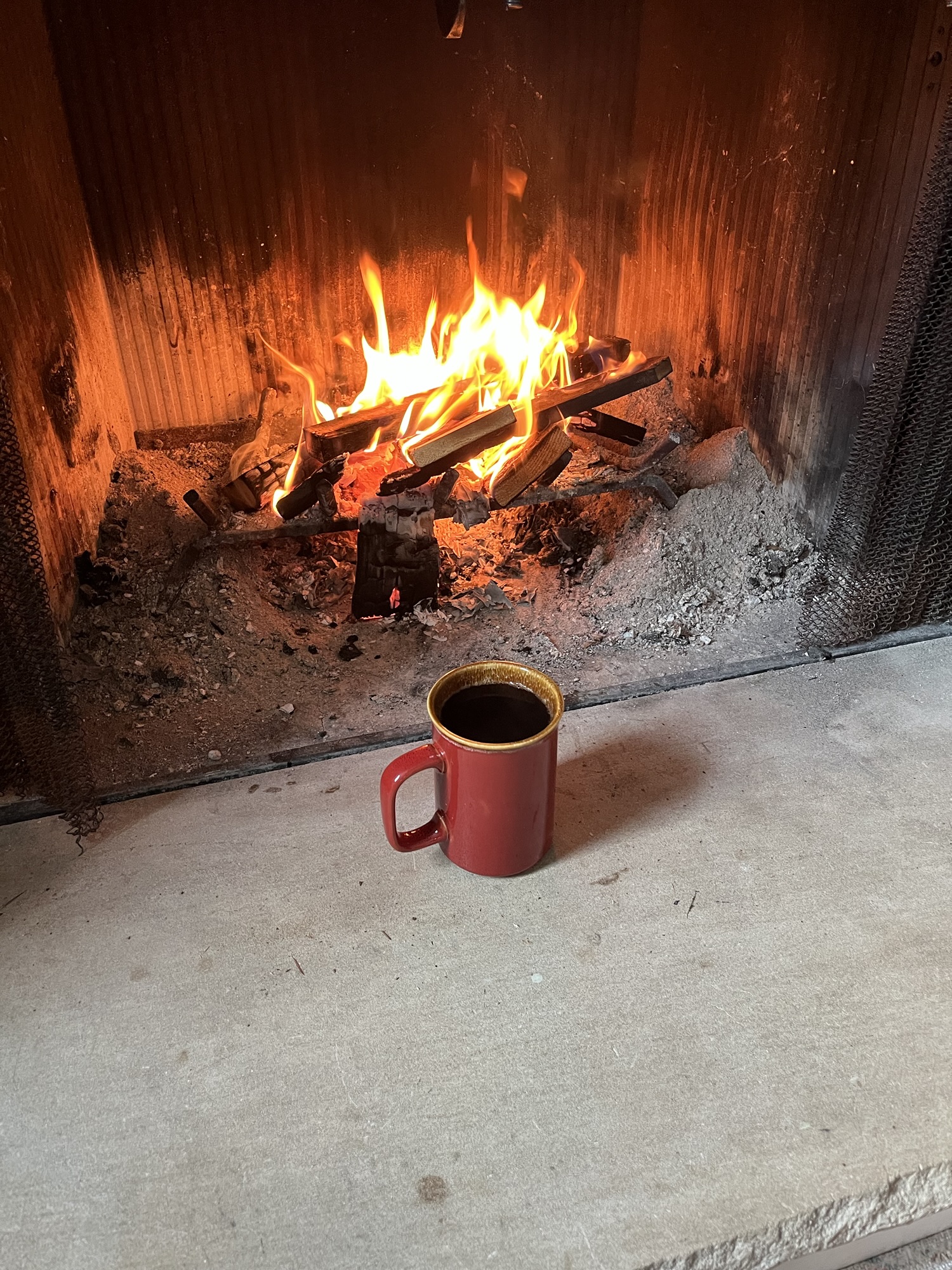
    During the cooler days of autumn, nothing takes the chill out of the bones like a good fire in the hearth.

    What of Thanksgiving? The family coming together. The food. The pies. When I was a child, Thanksgiving evening was always when they showed The Wizard of Oz on television. I could see that movie in July and it will still evoke Thanksgiving memories for me

    Fall is also the prelude to Winter. As a child, it did not snow where I grew up. Christmas visions of white Christmases and snowmen did not seem real. We had palm trees and hibiscus bushes. For the past several decades I have lived in the snow belt. White Christmases are still magic, but that is Winter, and another tale for another time. I only mention it as another door that Autumn leads us to.

    Fall is also football. College football is my favorite, but in the past few years I have gotten to like professional football also. And hockey, that quintessential winter sport – it starts in the fall.

    So tonight, look out at the sky. Feel and breathe the crisp air. Imagine magic in the air and all around you. It’s there, if you believe!

    Keep rambling.

    If you like what you read, please like and subscribe.